It's not about thinking, it's about paying attention
A math-free explanation of how a Transformer finds the next word
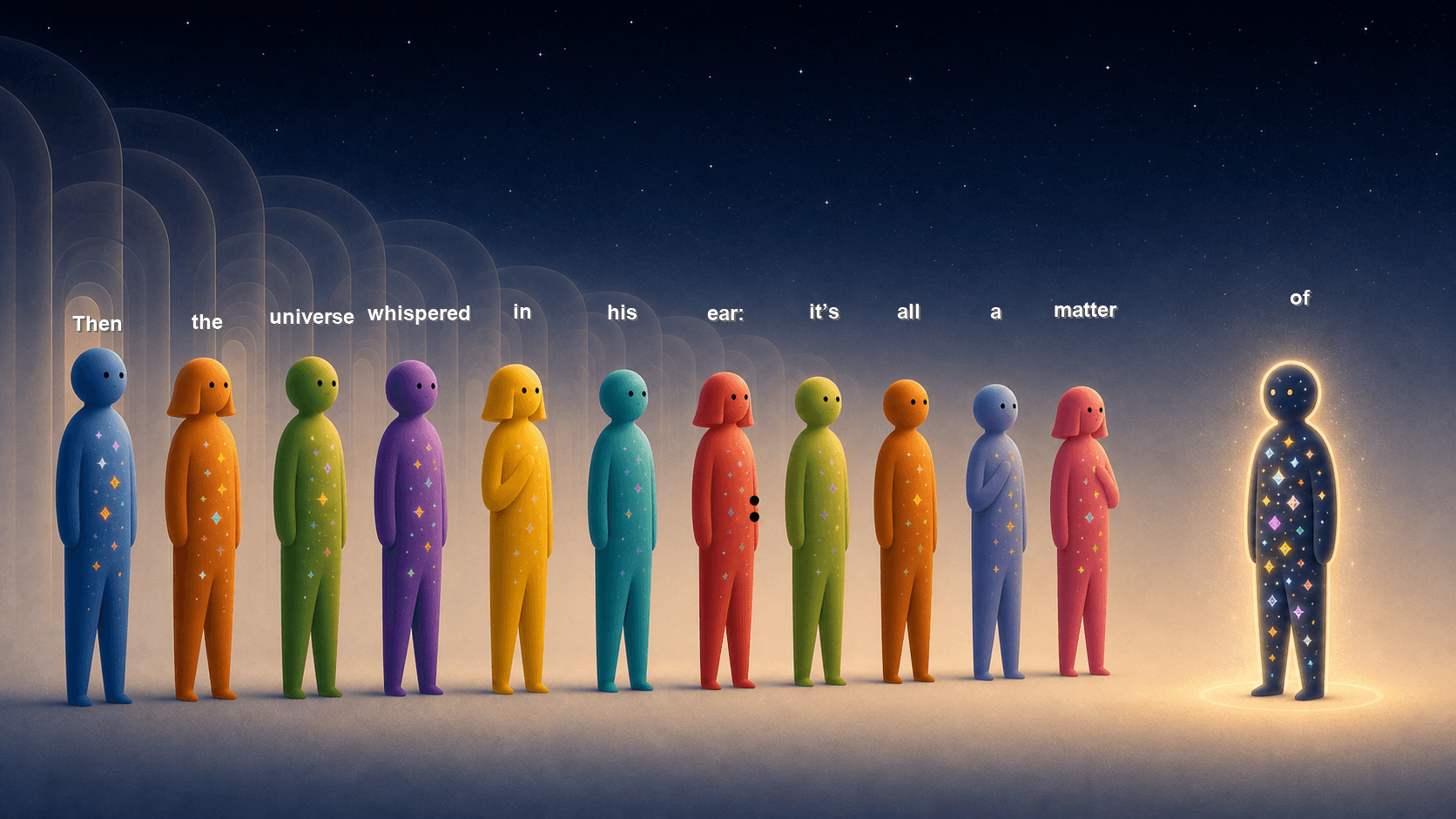
The sentence “Then the universe whispered in his ear: it's all a matter of” is about to enter the Transformer, so this machine can help predict the next word.
Each word is represented by a person.
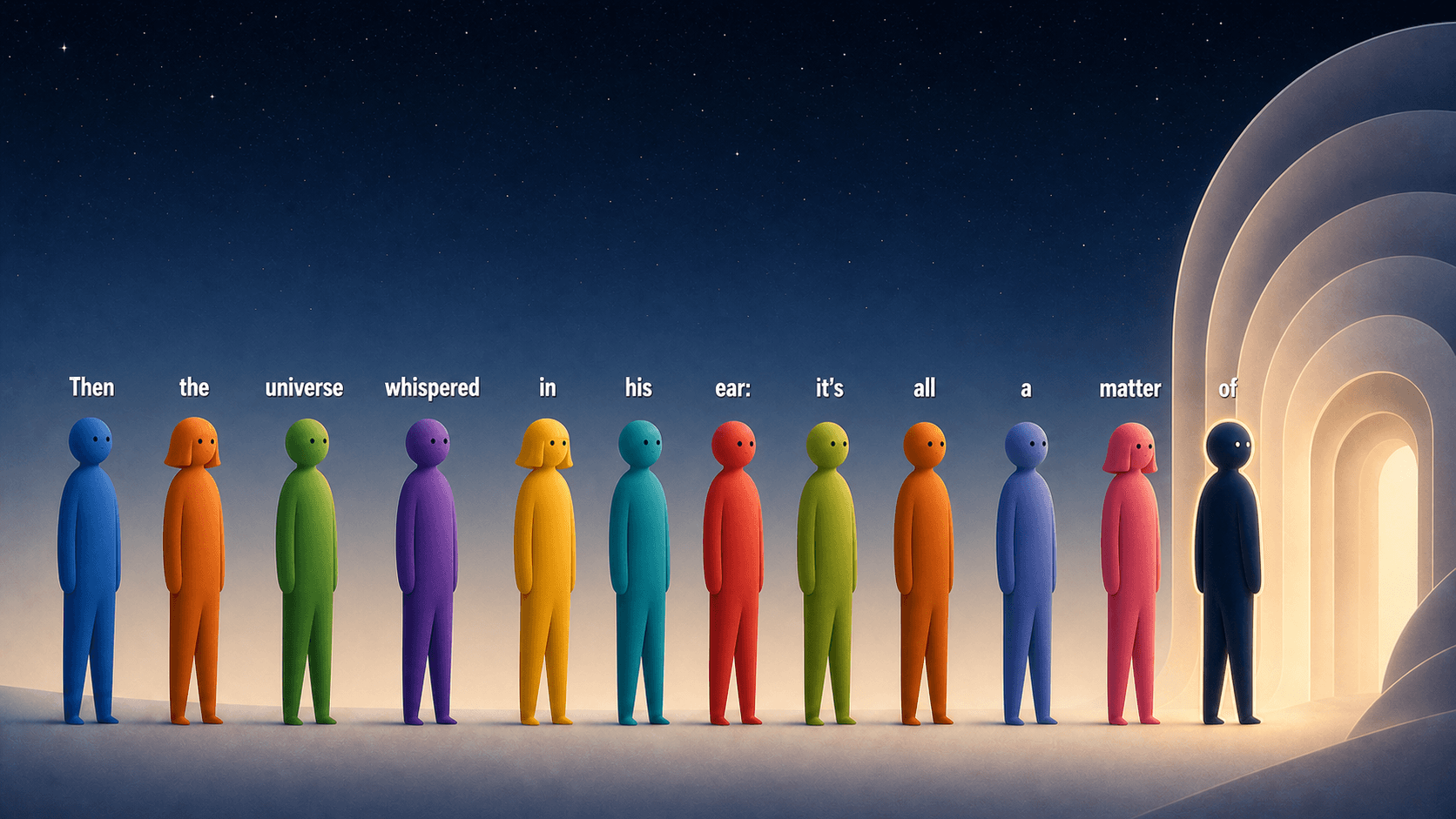
Step 1 - Listening to what matters
Before entering the first level of the Transformer, each person is cloned as many times as there are rooms in that level.
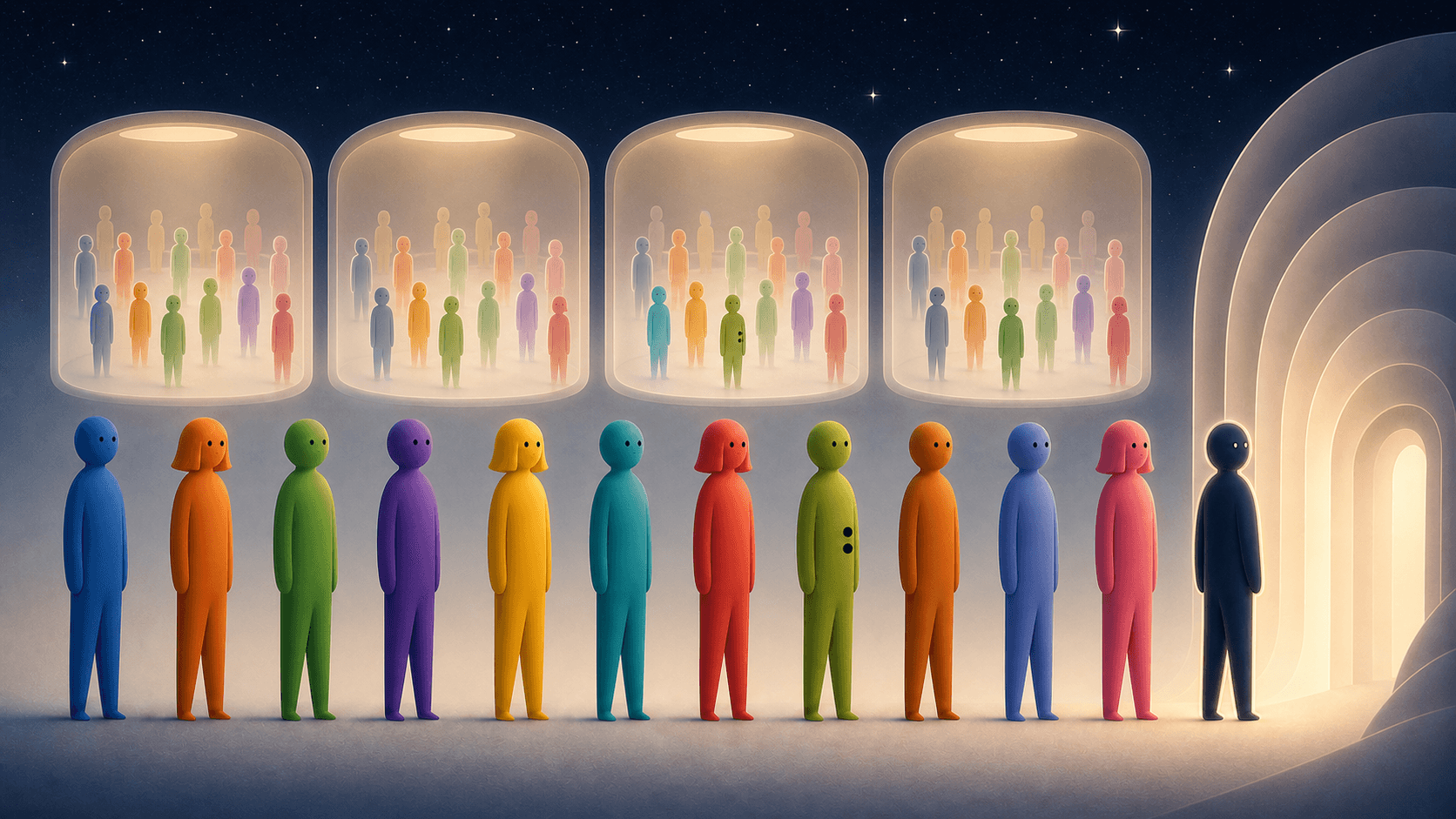
Different things happen in each room. By this point, every room has taken on a role through an earlier process of preparation: some pay more attention to meaning, while others focus on structure, closeness, order, or dependencies between words.
Each clone enters a room together with the clones of all the other people: that is the available context.
There are two important details:
1) Each person, and therefore each clone, knows where they are in the sentence.
2) Each person can only pay attention to themselves and to those who came before them, not to those who come after.
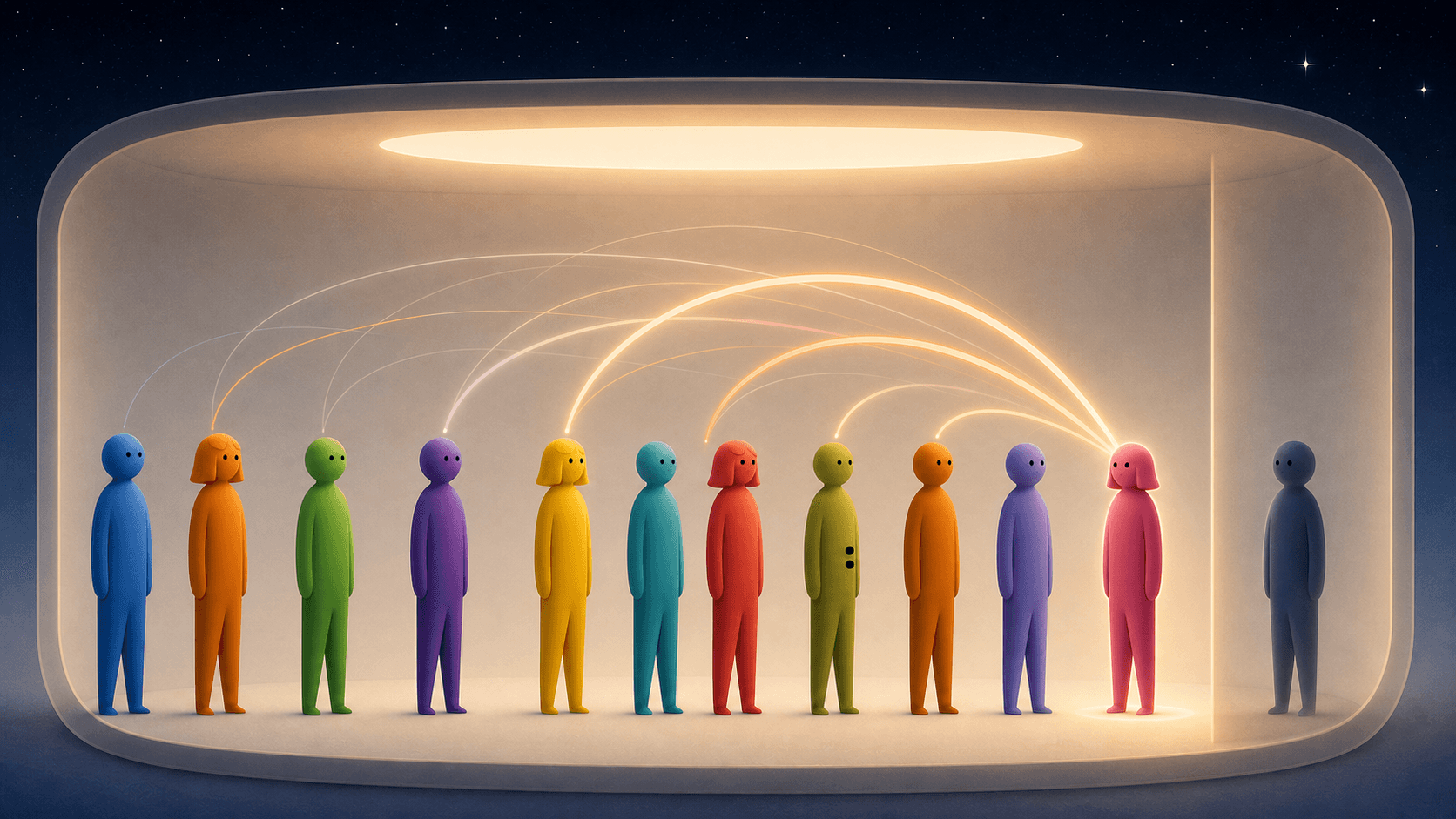
The room is not just a meeting place. It also imposes a particular way of conversing. In each room, the same people present themselves in a different way. That is why one room can make a word listen to one kind of relationship, while another room makes it listen to another.
In each room, every clone enters with a question: “What do I need to know to better understand my role here?” The others show a signal that makes it possible to recognize whether they are relevant. If the signal matches the question, the clone pays more attention and takes more from the content that person has available. If it matches less, it takes less.
Once the round of encounters is over, all the clones leave their rooms and consolidate back into their respective people.

Each person becomes loaded with a mixture of the information they gathered by relating to the others, giving more weight to what was offered by the people they identified as most relevant.
They are no longer exactly the same person who entered: now they know more about the context they are in.
Step 2 - Time to reflect
With everything they have gathered, each person enters a private room of reflection. This time there are no more clones and no more conversations. Now they are alone, internally processing what they have received.

In the room of reflection, the person recognizes what has been discussed and, from there, remembers things learned long ago: facts, associations, nuances that no one in the rooms mentioned. No one brings them in from outside: they come from their own memory.

When they leave, they know more than anyone told them: they have enriched the conversation with what they already knew.
Now transformed, they are ready to repeat the process from the beginning and keep enriching themselves through new conversations, together with the other people, who have also changed.
Step 3 - Repeating the process many times
The people have only passed through the first level. They still have many more to cross, perhaps a hundred, one after another.
And from each level, they will emerge a little more transformed: richer, more sensitive to context, more filled with relationships. But no matter how many rounds they go through, none of them erases itself: at every step, what they learn is added to who they already were. It never replaces them.
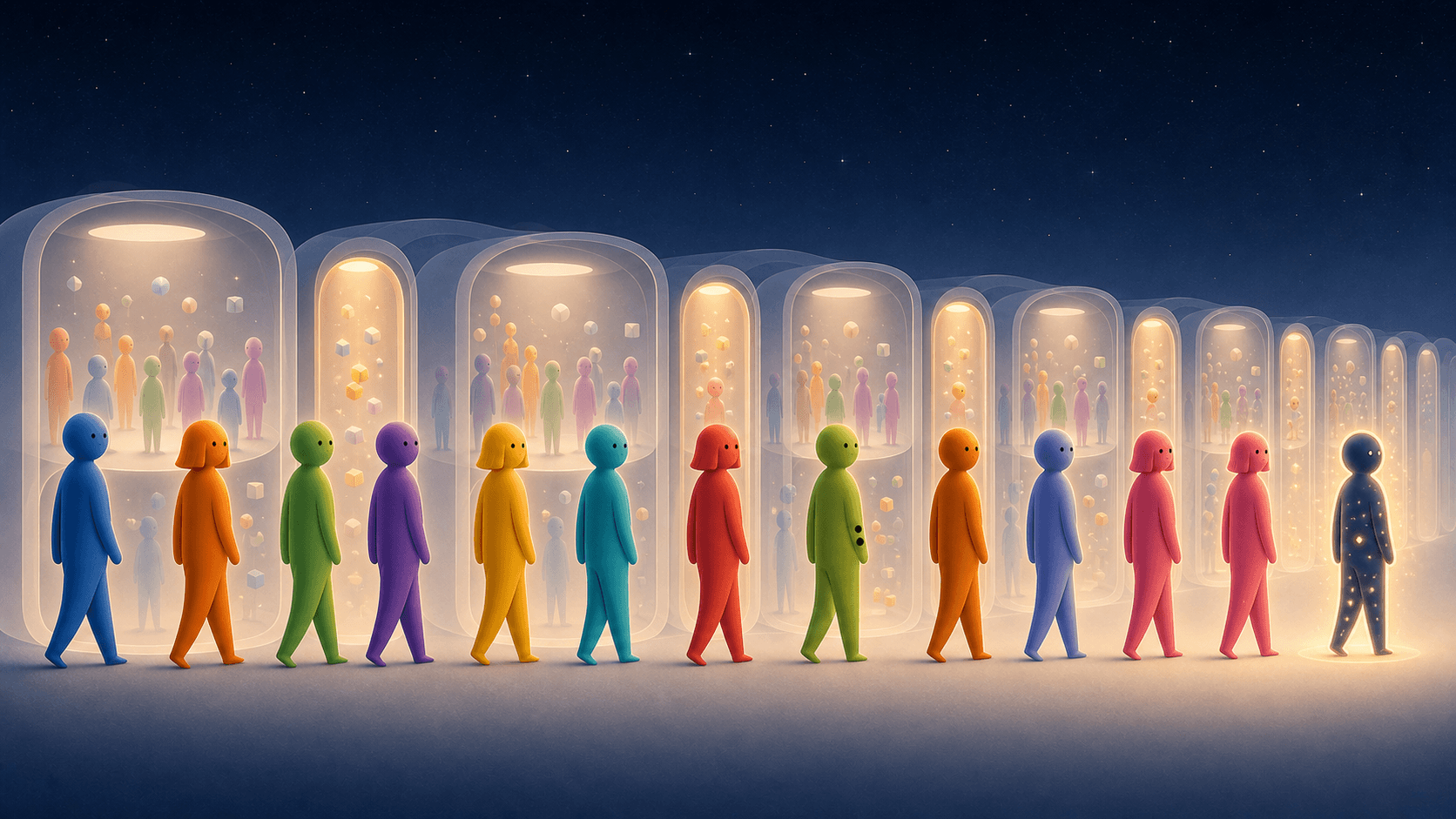
Once they have left the final level, everything is ready.
Everyone looks at the last person: he will be the one to choose the next word.
Step 4 - The next word
The last person is the one most loaded with information, because he is the only one who has listened to all the people before him.
He steps into the open air and looks up at the sky. There are many stars; each star represents a word in the vocabulary.

He closes his eyes and attunes himself to the universe. For a moment, he projects his state onto the sky.

He opens his eyes and sees several stars shining. The ones that shine brighter are those that resonate most with everything he now carries within him. But one shines brighter than the rest. He could choose it, as many would expect. Or he could let himself be carried a little by chance, release the poetry, and choose one of the others.

He chooses a star.
And there, trembling in its light, the next word appears: “time”.